The Isle of Man Gas Opportunity

Local Gas. Lower Emissions. Long-Term Public Value.

Situated within the Isle of Man’s territorial waters lies a potentially significant gas discovery. The gas development could deliver billions of pounds in tax revenue to the Isle of Man.

  • The gas field sits directly beneath the proposed Mooir Vannin wind farm.
  • The gas field cannot be developed if the wind farm is in place.
  • It may be possible to develop the wind farm once the gas field has been developed.

There is thus economic competition for the same sea-bed area, with the choice of:

  1. Gas only.
  2. Wind only.
  3. Gas + wind – but NOT wind and then gas.
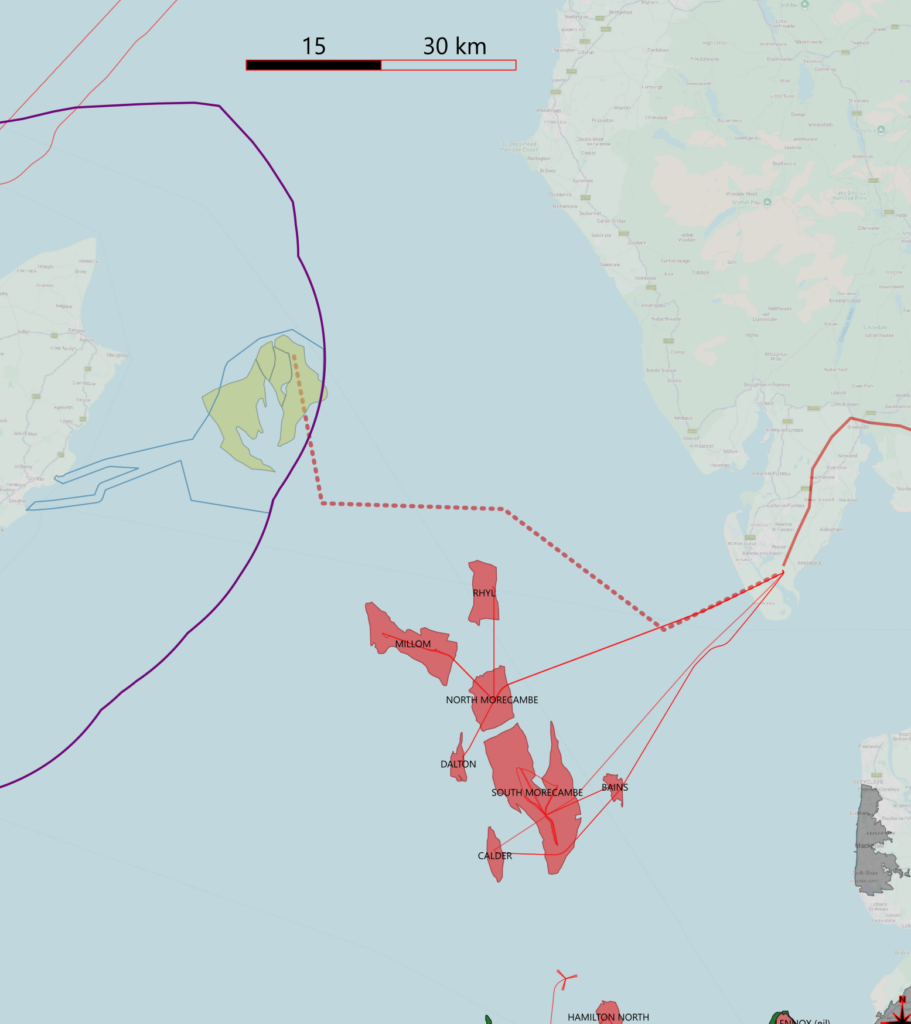
Map illustrating the spatial overlap between the proposed wind farm and the gas field

The Case For Manx Gas

Strategic advantages of developing local Manx gas resources.

Energy Security

Local gas could provide energy security to shield the Island from global supply shortages.

Price Security

Could provide capped gas prices to IoM customers to prevent energy price spikes feeding through to household bills.

Tax Revenue

Will provide billions of pounds of tax revenue to the island.

Net Zero Compliance

Will reduce CO2 emissions as local gas has lower emissions than imported gas, and could form part of a UK Carbon Capture and Storage system to provide emissions-free electricity to the Island.

Visual Impact

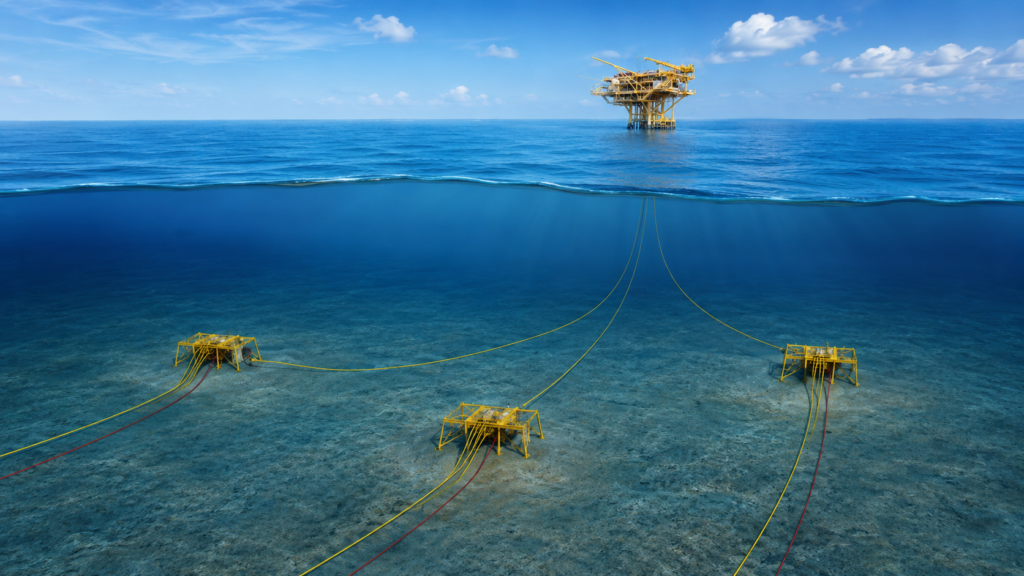
Sea-bed well-heads connecting to a 30m tall unmanned installation approximately 10 miles off the coast.

No CO2 Emissions at Source

Compressor power supplied from shore.

Illustration of an offshore production installation at sea

The Development

The baseline local gas development.

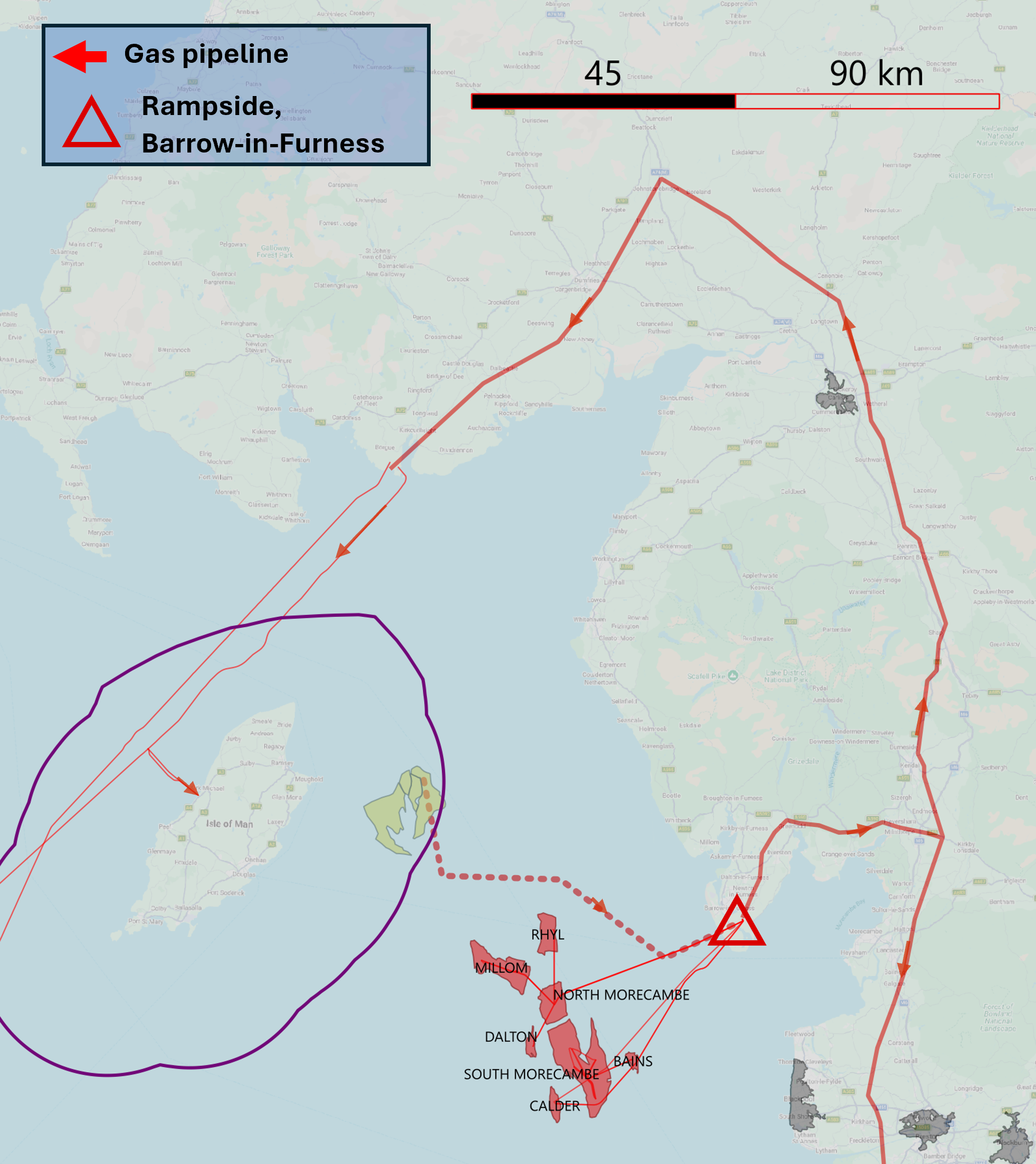
1. Subsea pipeline & Barrow Processing

Gas piped to Barrow for processing at existing facility (dashed red line and red triangle).

2. Domestic Supply

10% of gas piped back to the IoM for domestic supplies through existing pipeline network and Irish interconnector spur (solid red line).

Illustration showing placement of subsea pipeline and domestic supply line

The Net Zero Development

Step-by-step progression of the local gas development and carbon capture integration.

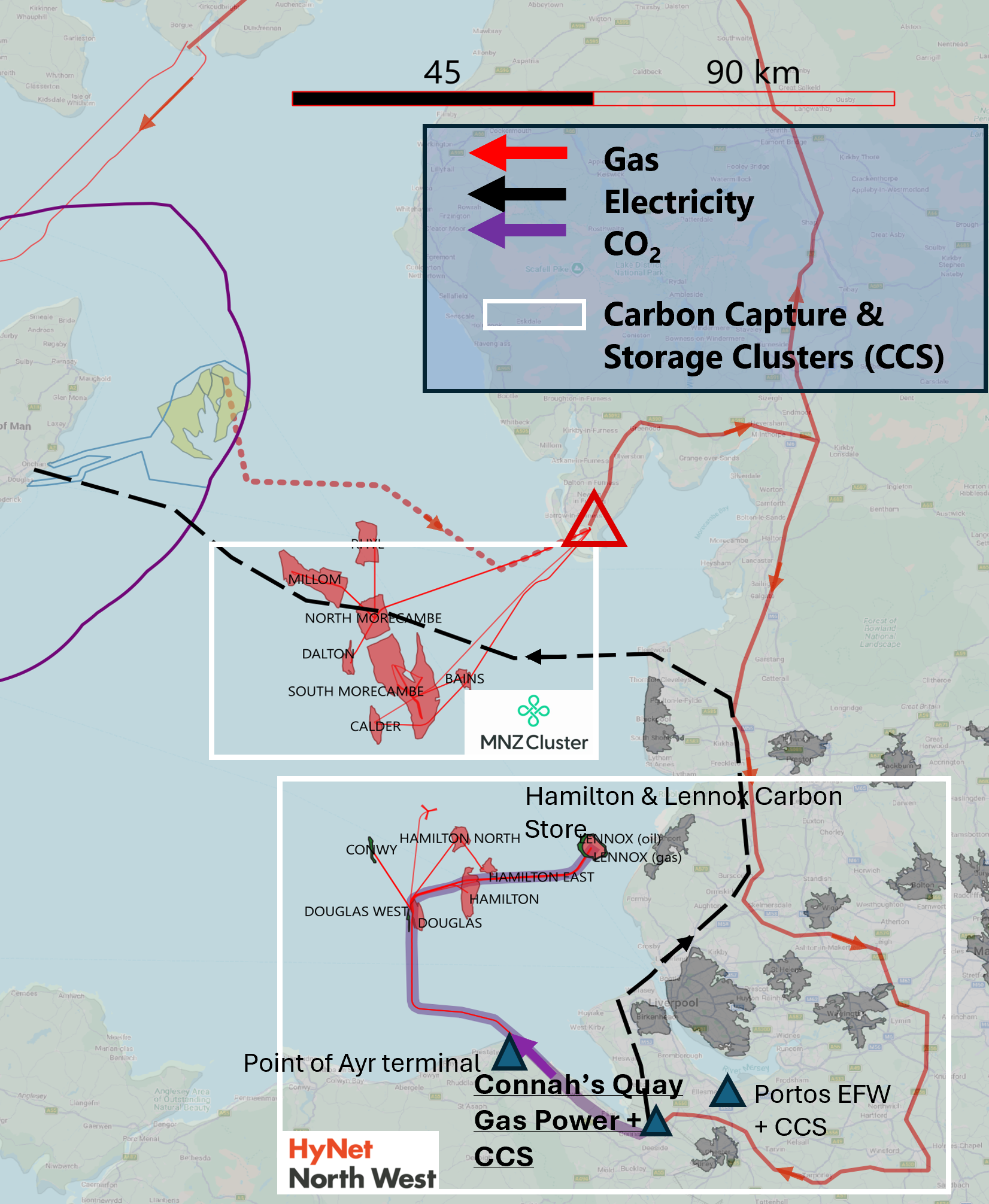
1

Barrow Processing

Gas piped to Barrow for processing at existing facility (dashed red line and red triangle).

2

Domestic Supply

10% of gas piped back to the IoM for domestic supplies through existing pipeline network and Irish interconnector spur (solid red line).

3

Connah’s Quay Generation

90% of gas piped to Connah’s Quay for electricity generation and CO2 emissions capture as part of the CCS scheme.

4

Carbon Storage

Captured CO2 emissions compressed and piped (purple line) to the Hamilton & Lennox Carbon Store for underground storage in depleted gas production reservoir.

5

Clean Interconnector

Emissions-free electricity supplies the Isle of Man through a new interconnector (black dashed line).

Detailed map showing the proposed pipeline network to Barrow and Connahs Quay

Energy Choices

Balancing economic value, environment, and security.

Economic Value

  • Gas development will deliver more tax revenues to the Isle of Man than the proposed windfarm.
  • Gas development could provide gas at lower prices and capped to reduce impact of price spikes.
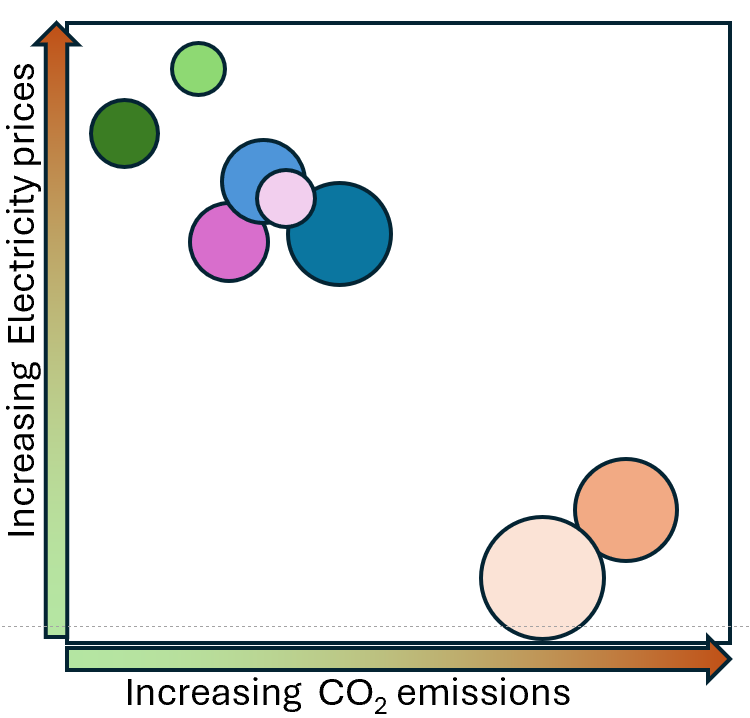
  • Gas development could provide electricity at lower prices at the expense of higher emissions.

Wider local economy:

  • Gas development has less negative impact on tourism and fishing.

Net Zero:

  • Gas Development is the lowest emission route if Electricity is supplied from the UK through an interconnector with further emissions reductions with a CCS scheme.

Energy Security

  • A local gas supply provides the most secure energy for gas and for electricity through local generation if desired. Offers options for local generation backup should interconnector supply fail.
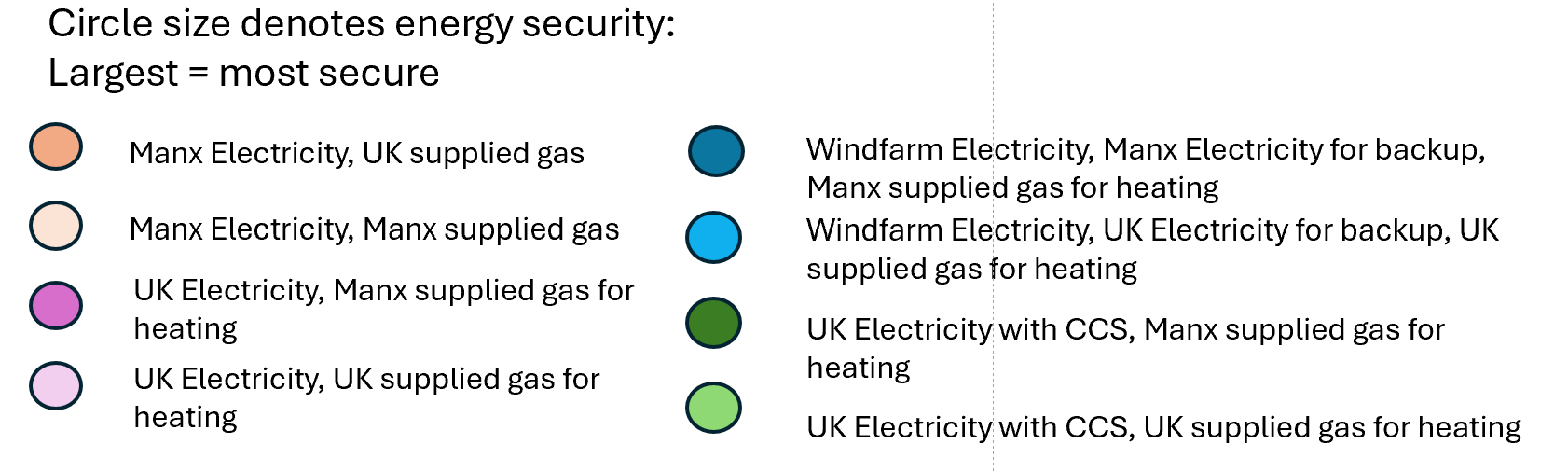
Scatter plot comparing electricity prices and CO2 emissions Legend for the scatter plot

The choice lies with Tynwald:

A gas development with CCS electricity generation for lowest emissions but high electricity prices.

A gas development with on-Island electricity generation for lowest electricity prices but higher emissions.

The Economic Comparison in Brief

Key economic tests for Isle of Man residents, Government finances and local impacts

Economic Test Gas Development Wind Power and Mooir Vannin
Price Protection YES — lower prices and capped surges for residents. NO — no protection from gas/electricity price spikes.
Project Support YES — no Government price guarantees required. NO — no UK CfDs/curtailment payments; may need guarantees.
Exchequer Benefit YES — benefits expected to exceed wind farm upside. UNLIKELY — the stated £2bn benefit is not secure.
Resident Bills YES — keeps electricity prices low, free of renewable tariffs. RISK — potential move from 29p/kWh to ~45p/kWh (+50%).
Wider Local Economy NEUTRAL — installations not expected to damage tourism or significantly affect fishing. BAD — visual impact concern; may negatively impact tourism and fishing.

The Bottom Line: A Simple Choice

  • Option A: A wind farm that raises bills and brings little benefit, or
  • Option B: A gas development that brings in higher tax revenues and keeps prices low.

Frequently Asked Questions

Have questions about our local gas development plans, environmental impact, or community benefits? Browse our commonly asked questions below.

Don't see the answer to your question? Please reach out to us at enquiries@marqueoil.co.uk

Will the gas development cost the Isle of Man anything?

No, the cost of developing the field will be privately funded at zero cost to the Manx government and Manx taxpayer

How will a gas development reduce global CO2 emissions and meet the Island’s Net zero commitments?

Local sourced and piped gas has a lower carbon footprint than imported Liquified Natural Gas. This is making an increasing contribution to the UK gas supply. Gas will be needed for decades to come for industrial use and domestic heating. Backup gas generated electricity will also be needed until the energy transition is complete. Manx supplied gas will therefore reduce overall emissions from power generation. In addition, if the Isle of Man imports electricity generated from Carbon Capture and Storage system using supplied Manx Gas, this electricity will be almost entirely emissions free.

Project Documentation & Resources

Access official reports, regulatory filings, and external reading materials below.

Marque Supporting Documents

External Industry Resources

This section is currently empty; please check back for new information